Artists and Scholars Gather at Fordham for Creativity and Social Justice Symposium
Artists, scholars, students, and community practitioners from across the United States convened at Fordham University’s Lincoln Center campus on March 5 2026 for a day long symposium exploring how creative practice can respond to social injustice and strengthen collective life. Held on the 12th floor of the Lowenstein Building, the Creativity and Social Justice Symposium brought together twelve invited artists working across disciplines, offering students and attendees an opportunity to engage with urgent questions at the intersection of art, activism, and community.
Hosted by Fordham’s Department of Theatre and Visual Arts, the gathering aimed to create a space for dialogue, reflection, and collaboration. Throughout the day, participants shared methodologies and personal experiences demonstrating how artistic work can open new ways of witnessing social realities, building solidarity, and imagining more just futures.
The symposium opened with welcoming remarks from Professor Fadi Skeiker, who framed the day around a central question: “What can creativity do in the face of injustice — not as decoration or distraction, but as a practice of witnessing, connecting, imagining, and acting?”
Jan Cohen-Cruz, a leading figure in the field of socially engaged art reflected on the evolving scope of art and social justice practice, raising questions about how impact is measured and who defines the field’s boundaries. She suggested that socially engaged art is most meaningful when it transforms both the practitioner and the communities involved.
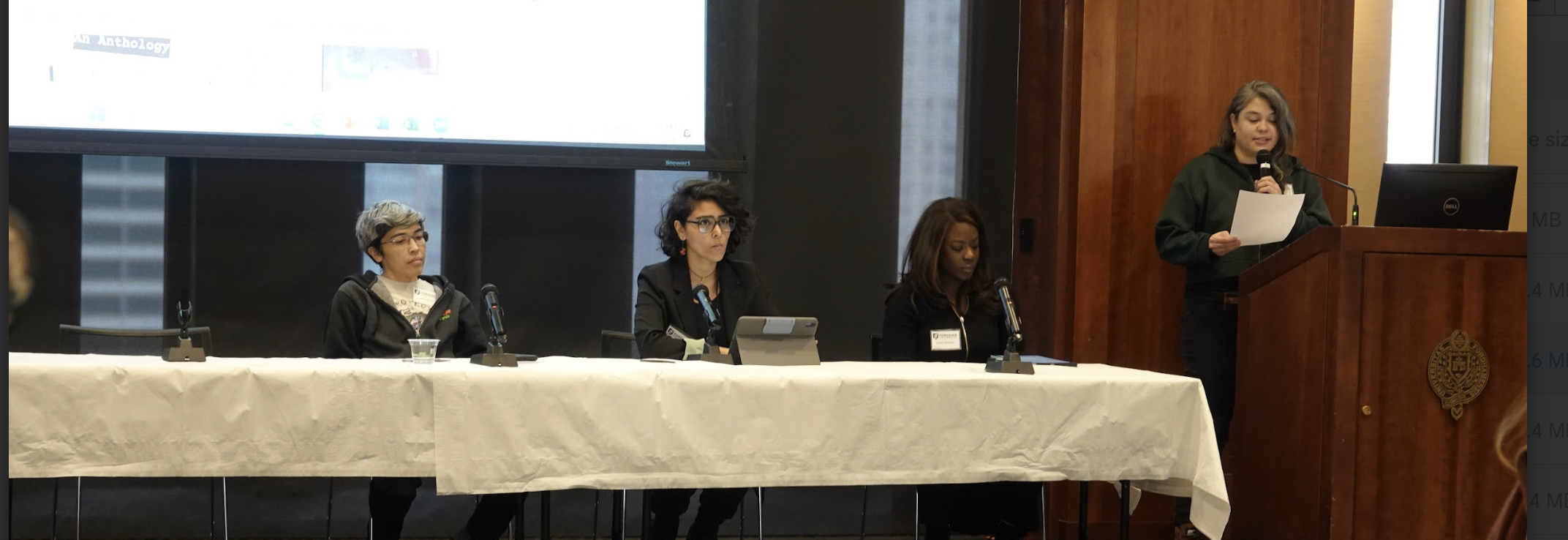
The first panel of presentations, moderated by Reyna Bonaparte of The People’s Theatre, showcased diverse artistic approaches. Chelsea Wilkinson discussed her research on graffiti as a catalyst for solidarity movements, drawing on case studies from Palestine and Richmond, Virginia. Photographer and educator Matthew López-Jensen presented site-specific projects focused on environmental stewardship and public awareness. Artist and producer Tonya Dyson described her work transforming a riverside park in Memphis — once marked by Confederate imagery — into a vibrant site of cultural gathering and expression for the Black community.
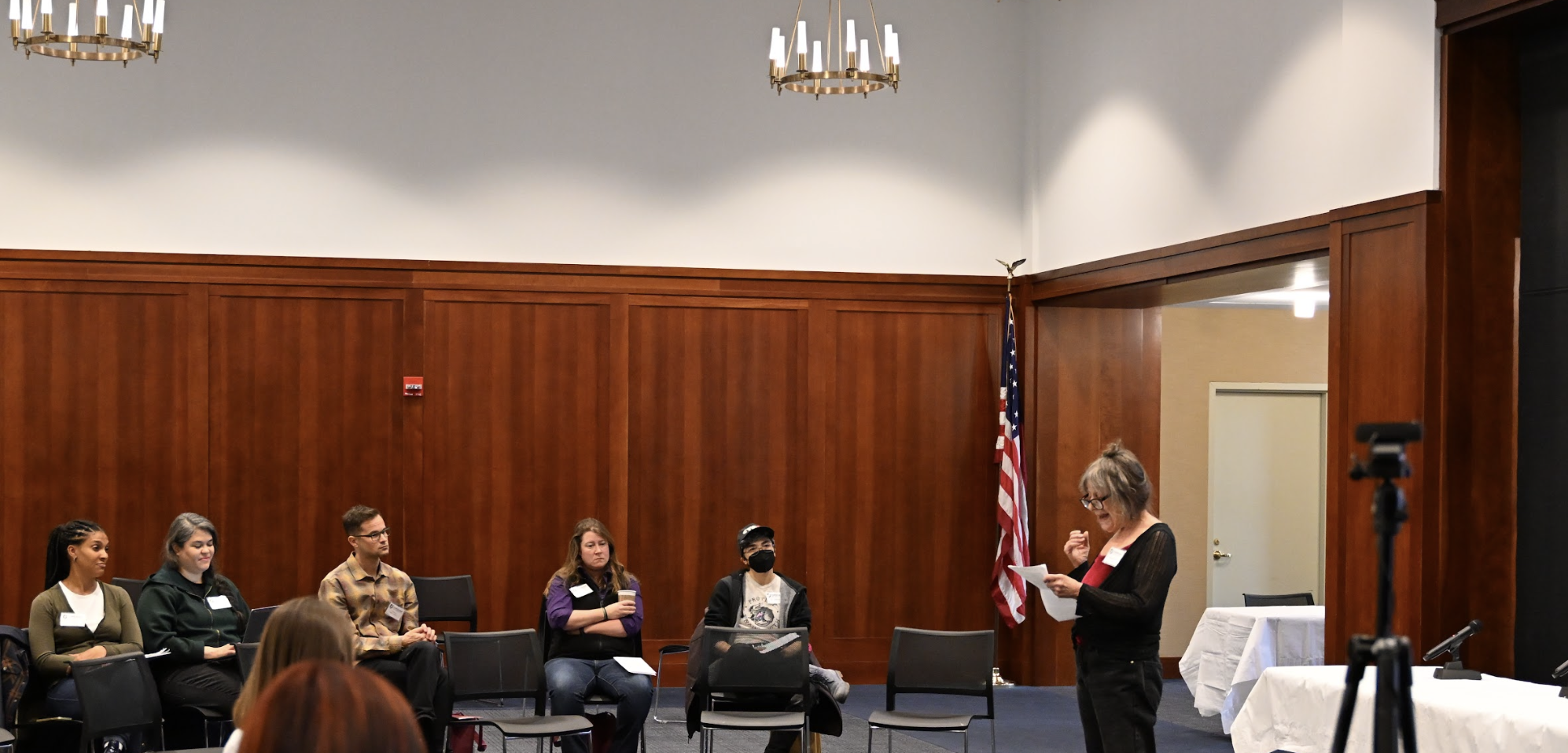
Later in the morning, theatre director and scholar Joan Lipkin introduced rapid-response theatre as a means of addressing breaking social issues. She illustrated this approach through a staged reading of her short play The Ice Confession, written to examine the motivations of individuals who join U.S. Immigration and Customs Enforcement.
Afternoon sessions continued with presentations moderated by brisa areli muñoz and introduced Vanessa Macaulay of the School of the Art Institute of Chicago, Iranian playwright and educator Yekta Khaghani, and Sulu LeoNimm, Executive Director of Theatre of the Oppressed NYC. Macaulay spoke about her exhibition Breathing Race into the Machine, which explores the racial histories embedded in medical technologies. Khaghani reflected on her experience working with an underground theatre collective in Iran and how those encounters shaped her commitment to storytelling as resistance. LeoNimm provided an overview of Theatre of the Oppressed’s history and its contemporary applications in community organizing and civic engagement.
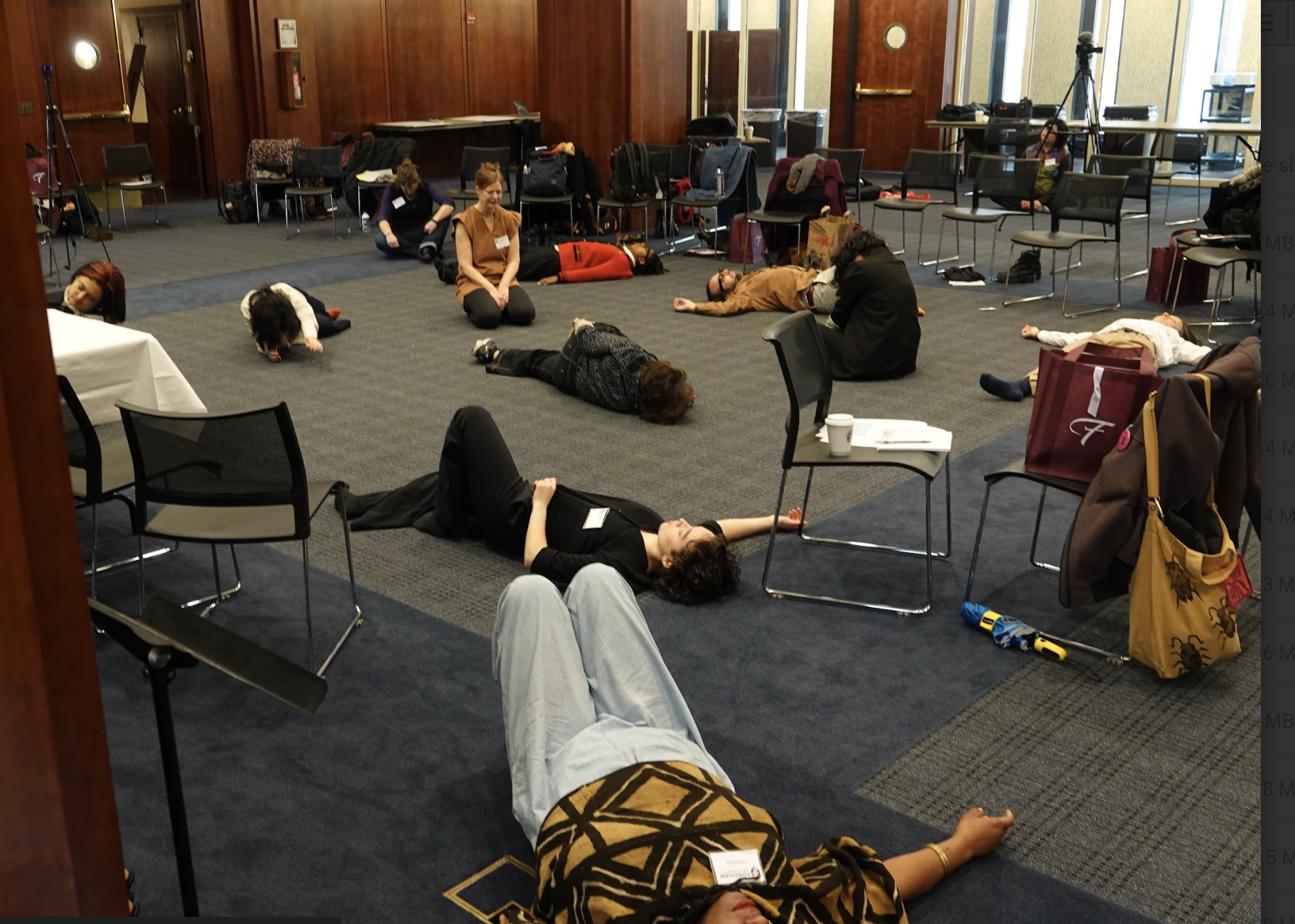
In addition to presentations, the symposium emphasized embodied participation. Guided movement and writing exercises by Meg Brooker, Reyna Bonaparte, and Birsa Areli Munoz invited attendees to collaborate in small groups and create short performance pieces responding to themes of justice, belonging, and collective action. These share-back performances closed the formal program, highlighting the symposium’s commitment to practice as well as dialogue.
Professor Skeiker concluded the day by thanking participants and emphasizing the importance of sustaining artistic networks committed to social transformation. The symposium, he noted, was intended not only as a forum for exchange but also as a starting point for future collaborations among artists, scholars, and students working toward more equitable communities.
The event reflected Fordham’s growing investment in community-engaged arts initiatives and underscored the role of universities as spaces where creative practice and social responsibility can meet.